Blue-spot Hairstreak (Satyrium spini)
2025 photographs highlighted in green. Click on any photograph to go to an enlarged picture, or simply scroll down the page.
|
|
|
|
|
| 33693_male_Var_12Jul13 | 21114_female_Var_28Jun10 | 10799_female_Var_23May08 | 10804_female_Var_23May08 |
|
|
|
|
|
| 49409_female_Var_20Jun22 | 45179_sex?_Var_5Jun18 | 44463_sex?_Alpes-Maritimes_17Jul17 | 46451_sex?_Var_12Jul19 |
|
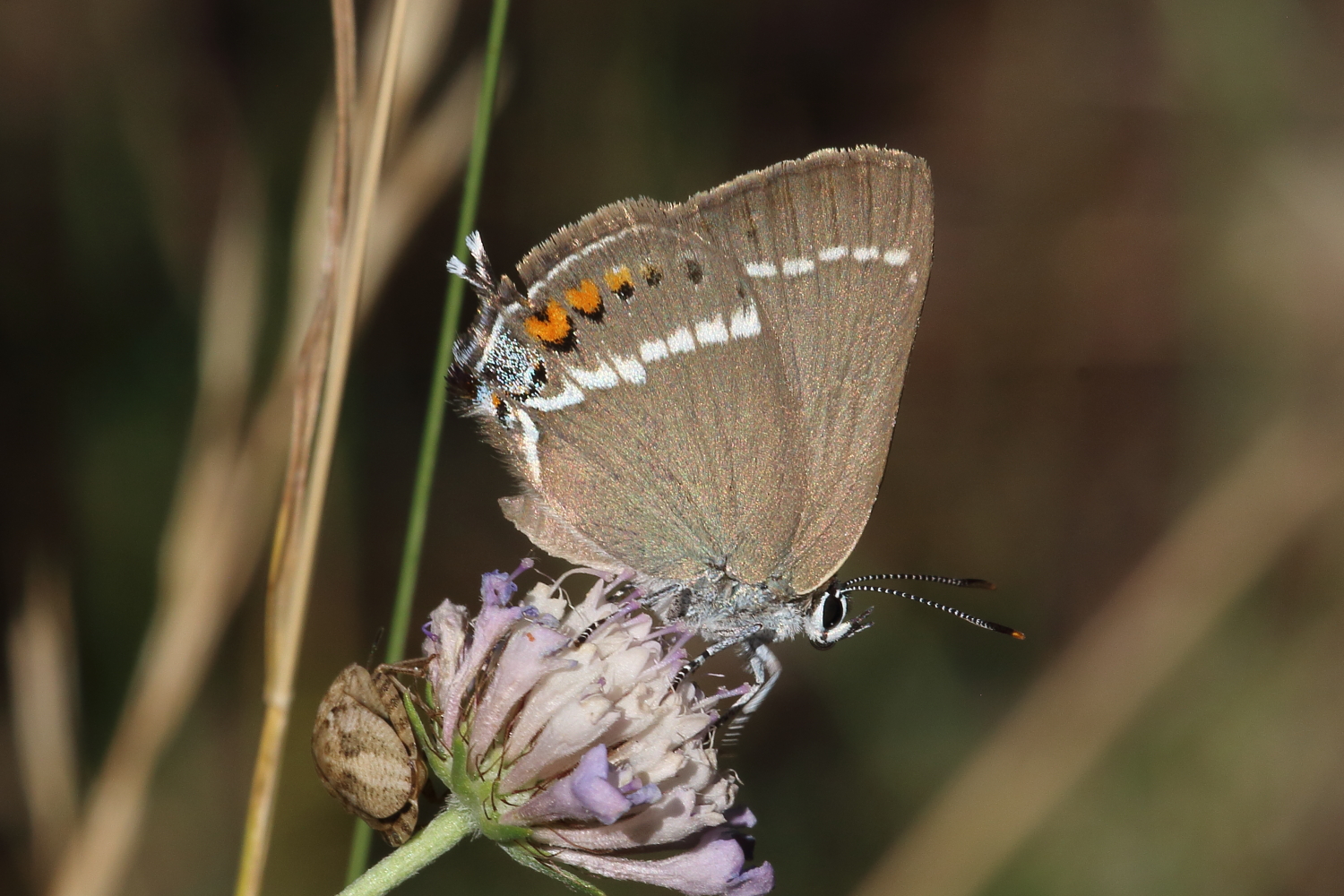
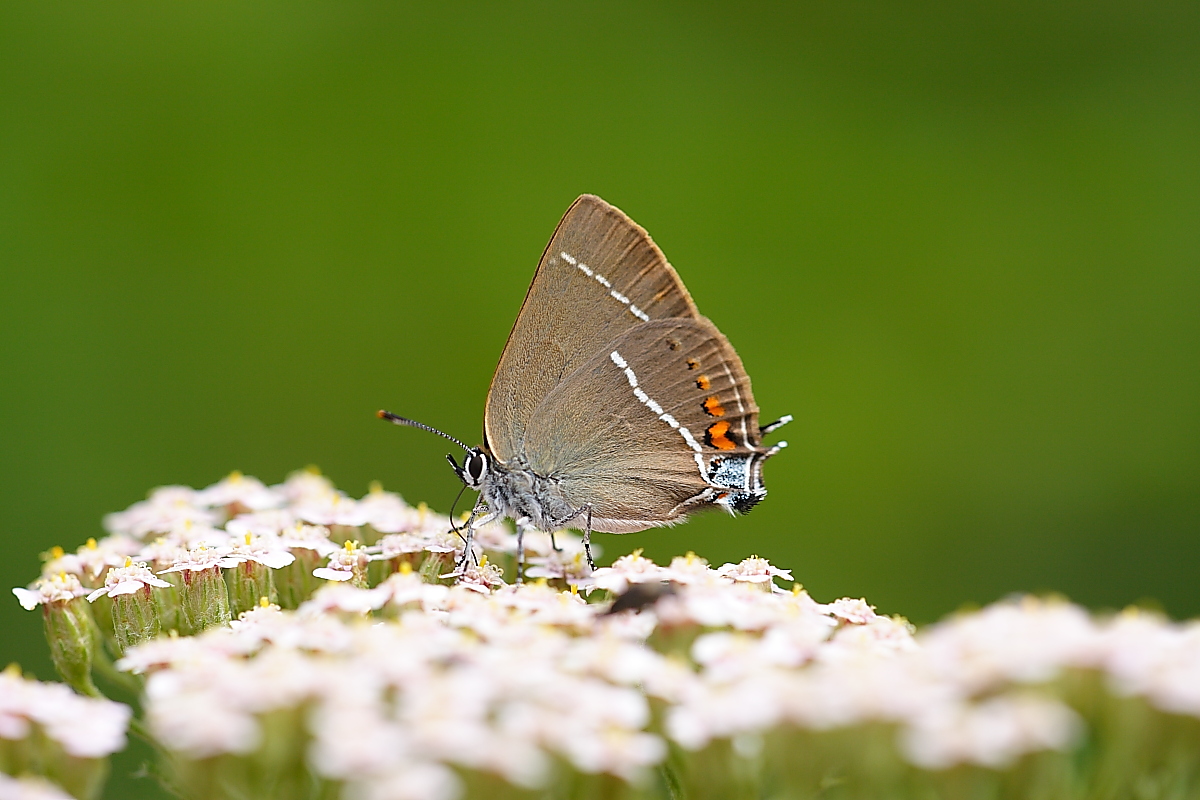
Quite reclusive and often sedentary, so can often be missed. Until 2006 I had seen only single individuals at altitude locations (around 1000m or more) in the Vercors National Park, at the Col de Vars and in the Alpes-Maritimes. However, in June 2006 I found fifty or more at a lowland location in Var and since then in good numbers at other locations. Probably this is because I had not visited lowland areas of southern France in June before, and was only seeing the later emergence at altitude. It is superficially similar to the White-letter (S. w-album), the Ilex (S. ilicis) and the Sloe Hairstreak (S. acaciae) but the strong straight white line and the blue spot near the base of the unh are unmistakable. |
It is also appreciably larger and more triangular in shape, being a slightly greyer (as illustrated by 33693) and lighter ground colour than many of its Satyrium cousins. It also seems to me to be a neat and tidy butterfly.
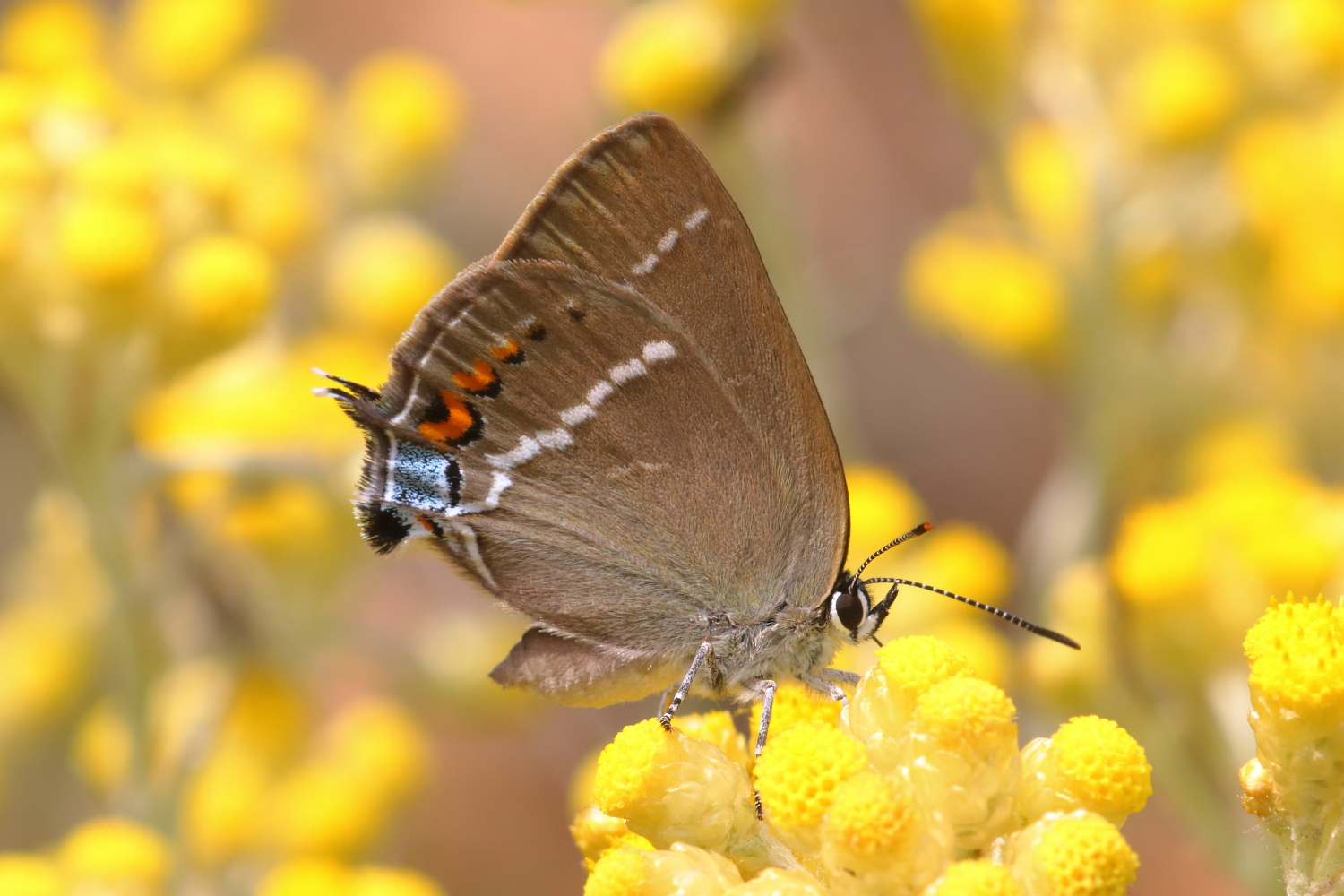
The blue spot is not entirely blue - the close-ups show that it is around 70% blue scales on a black background. The close-ups of some of the w-album specimens also have small blue spots in the same place. |
| ref | sex |
observations |
alt. m |
| 33693 | M | a male, taking honeydew from a leaf, quite a greyish ground colour. | 680 |
| 21114 | F |
On studying the magnified image, the end of the foreleg appears to be articulated and identical to the mid-leg and hind-leg and not hooked, which confirms that this is a female. |
450 |
| 10799 | F |
clearly a female, based on the visible body shape. |
185 |
| 10804 | F |
I had labelled this a female, possibly based on behaviour I saw in the field, but looking only at the photograph, the sex is not clear. |
185 |
| 49409 | F | a female, surely, based on the body shape. | 810 |
| 45179 | ? | the end of the foreleg is not visible so it is not possible to say whether this is a male or a female. | 200 |
| 44463 | ? | the end of the foreleg is not visible so it is not possible to say whether this is a male or a female. | 1550 |
| 46451 | ? | the body shape is visible but I am not sure whether it is large enough to suggest that 46451 is a female. The ground colour is a rather cold grey-brown and the white line, of the unh in particular, is very wide by the norms of this species. | 680 |




44463_sex?_Alpes-Maritimes_17Jul17