

Southern Small White (Pieris mannii)
2025 photographs highlighted in green. Click on any photograph to go to an enlarged picture, or simply scroll down the page.
|
|
|
|
|
| 7987_male_Isère_5Jul07 | 17908_male_Isère_11Jul09 | 46578_female_Alpes-Maritimes_16Jul19 | 53748_male_Pyrénées-Orientales_06Jul25 |
|
|
|
|
|
| 46543_male_Var_14Jul19 | 46551_male_Var_14Jul19 | 17921_male_Isère_11Jul09 |
|
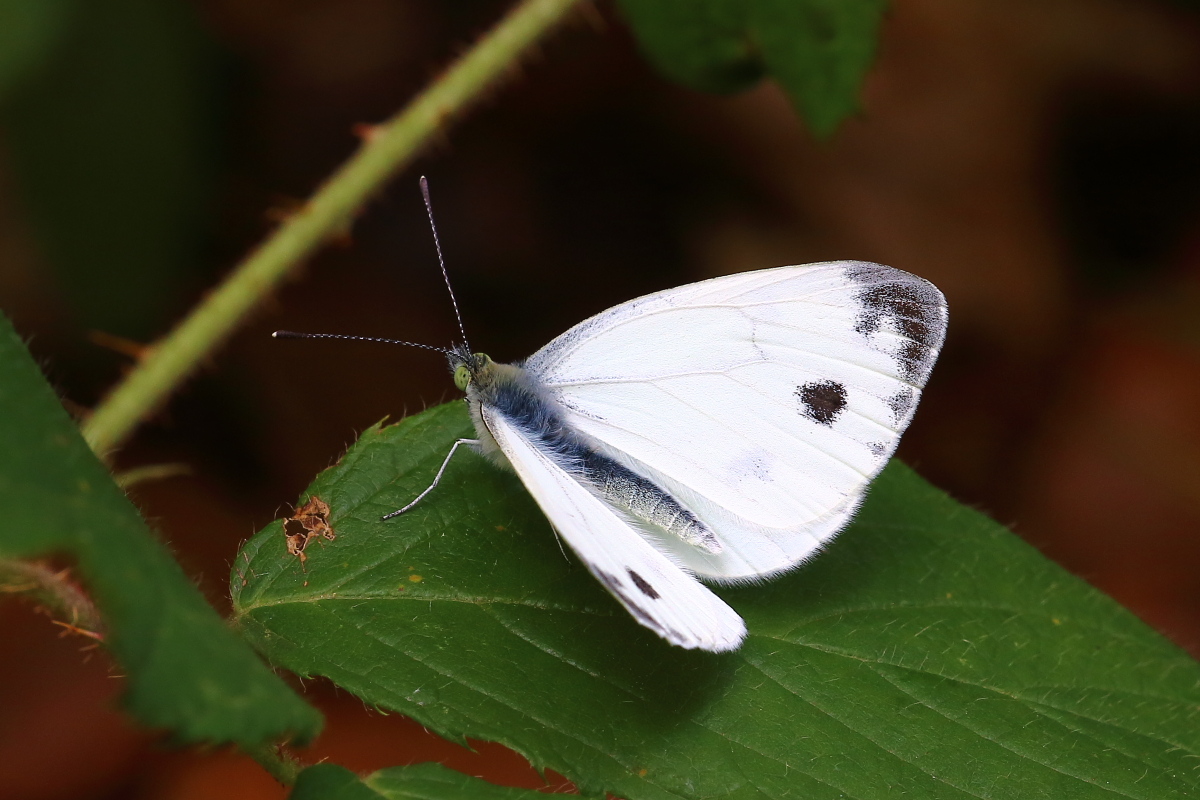
Mannii is an attractively-marked butterfly principally occurring in the south-east in France where it can be quite common in the far south. It always seems to me to be a very clean white with strong black markings and an appealing lemon yellow unh. It is polyvoltine (multiple brooded) with the first brood being more lightly marked than the summer brood (second generation), perhaps more evident in the female where the summer brood is very heavily marked (as in 46578).
Mannii is very similar to the Small White (P. rapae) but there are some distinguishing features: |
1) in the summer brood in particular, the mannii upf apical mark is thicker than rapae and reaches down to vein 4 or 3 (rapae reaches only to v6 or v5) and the outer edge of the forewing black spot in s4 is either concave or flat (quite pronounced in 17908), whereas rapae is convex. In my experience this mark in mannii is usually flat rather than concave.
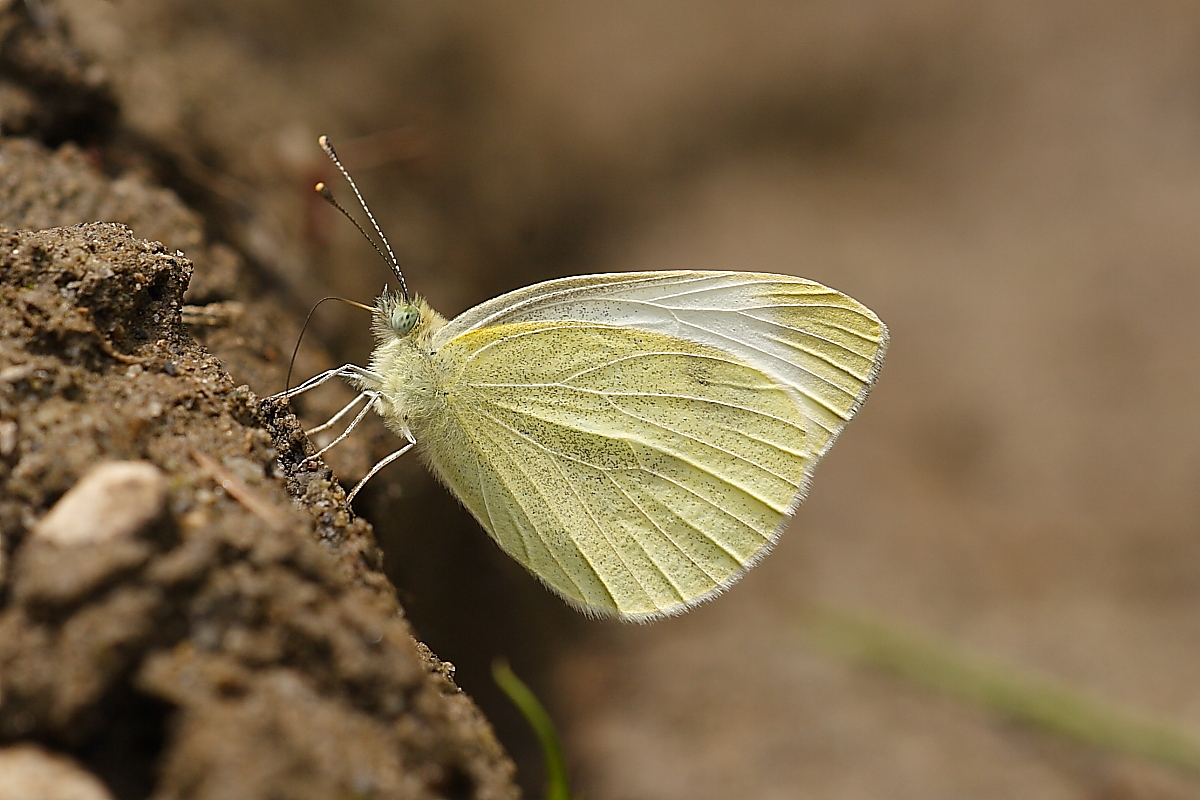
2) the mannii unh is less yellow than rapae and there is a light dusting of grey scales around the cell (see enlarged 17921 below); in mannii this dusting is broadly across the whole surface but in rapae it is mainly below the cell area.
3) the mannii forewing margin is more rounded than rapae.
4) the rapae (below left) forewing vein 7 is forked at the end, mannii (below right) is not. This fork may be very small, such that a detailed enlargement may be needed to see it. (But see the comments on 7965 on the rapae page). |

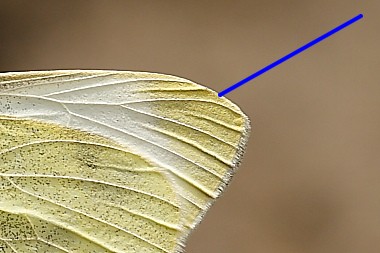
rapae mannii
|
ref |
sex |
observations |
alt. m |
|
7987 |
M |
a male of the summer brood. |
900 |
|
17908 |
M |
a heavily marked male of the summer brood. |
1120 |
| 46578 | F | a heavily marked female of the summer brood. | 1000 |
| 53748 | M | a male, but is it mannii? It has been suggested by an expert that it is a Green-veined White (Pieris napi) mainly on the fact that the upf discal mark does not have a straight external edge. However, the apical mark is not solid as I would expect for napi and I have seen examples of mannii that have this slight external bulge in the upf discal mark, but along the vein, as in 53748. There were male napi at the same site which showed the classic upf apical markings, so I find it hard to believe that this was also napi, looking very different. Comment invited, with rationale please. | 1170 |
| 46543 | M | a male showing the apical mark. 46551 is the same individual. | 450 |
| 46551 | M | the same individual as 46543 but with the wings folded down. | 450 |
|
17921 |
M |
a male of the summer brood, probably the underside of 17908, and rather paler yellow than normal. |
1120 |


46578_female_Alpes-Maritimes_16Jul19
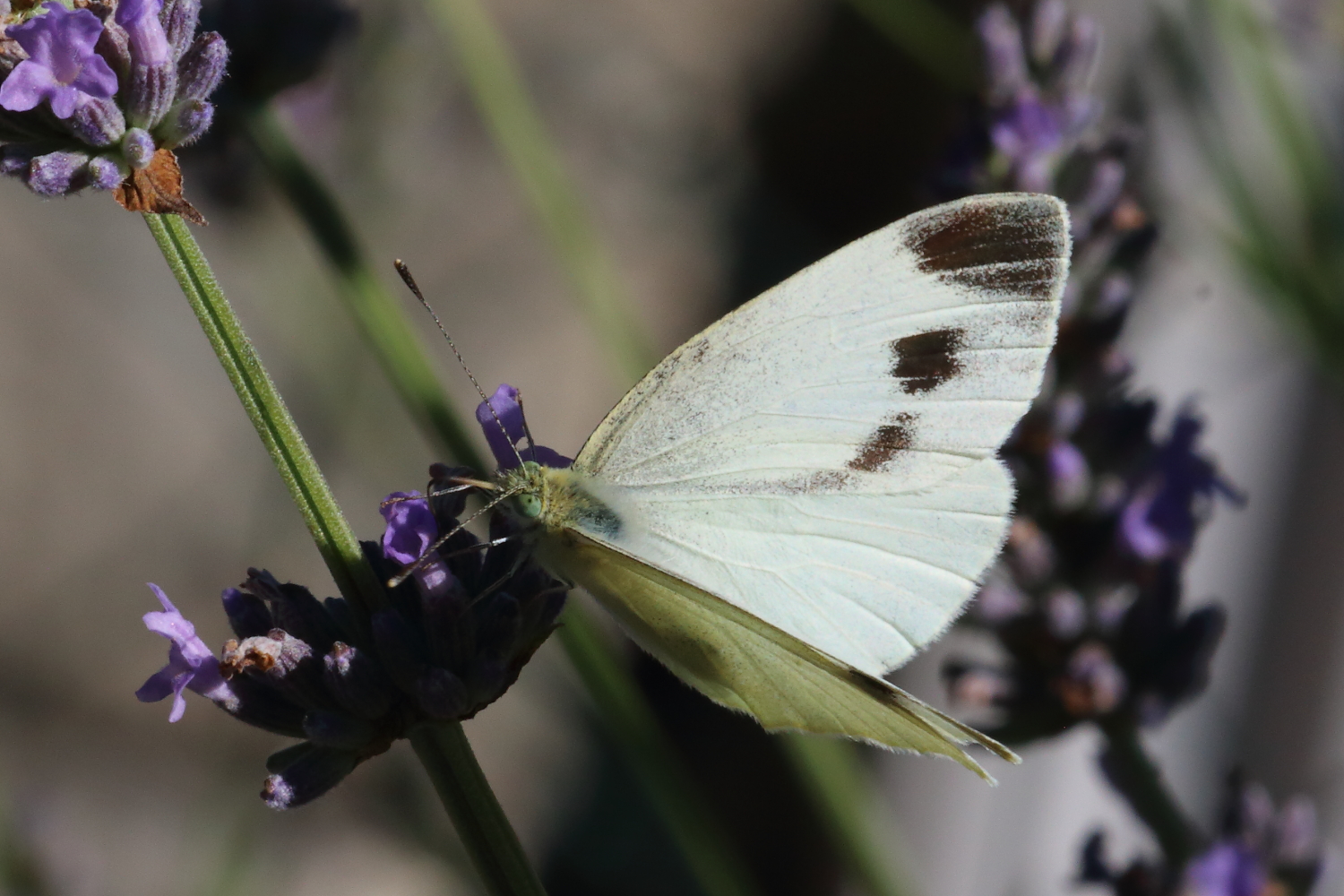
53748_male_Pyrénées-Orientales_06Jul25